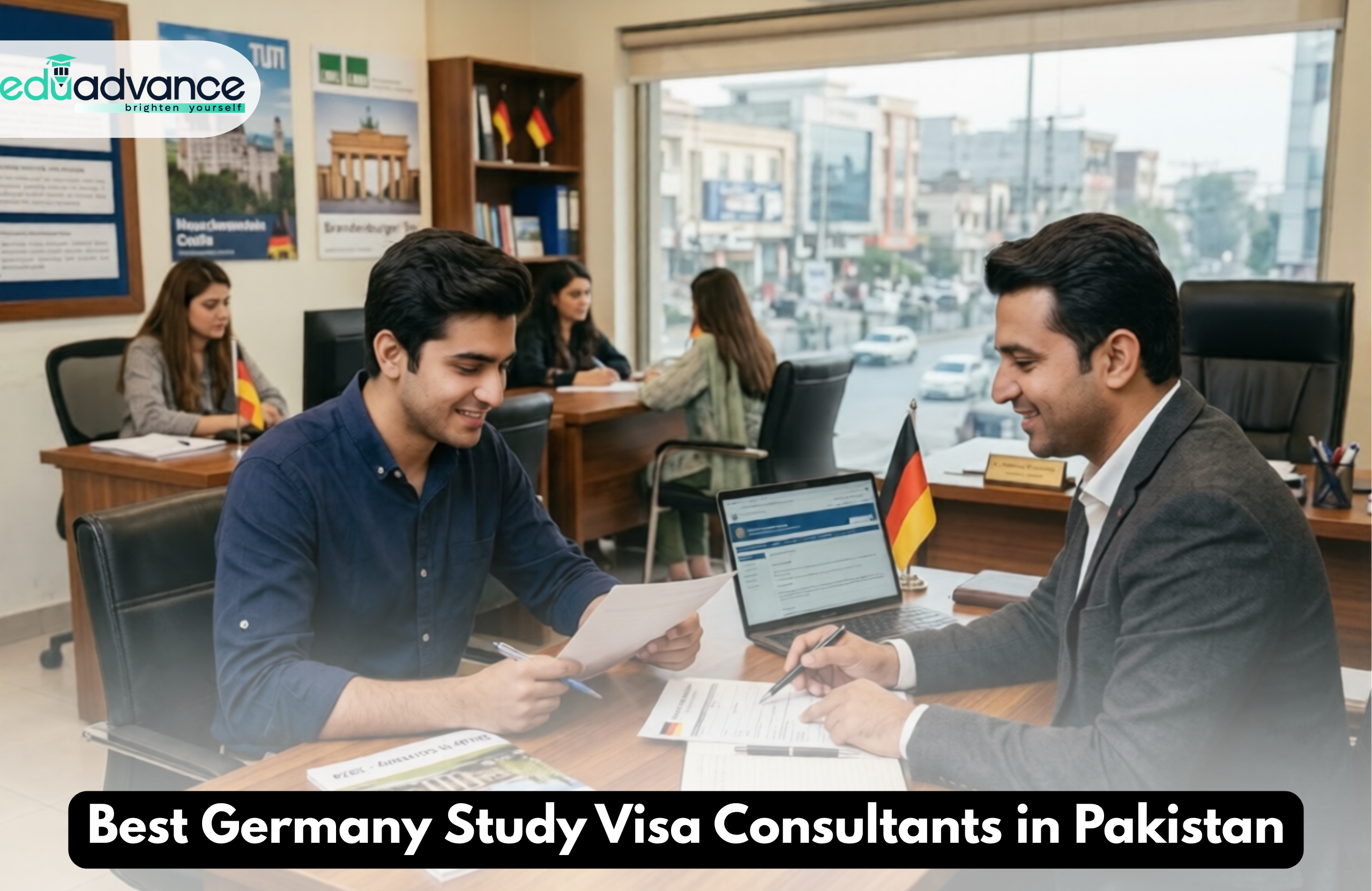
Best Germany Study Visa Consultants in Pakistan
So you have decided Germany is the place. Maybe it was a cousin's WhatsApp story from Munich, maybe it was the “no tuition fee” line that keeps popping up on YouTube, or maybe you just did your research, and Germany genuinely made sense for your subject. Whatever brought you here, welcome. You are about to read the most honest breakdown of the Best Germany study visa Consultants in Pakistan, a process that you will find in one sitting: no fluff, no scary agent tactics, just facts explained the way we would explain them to our own younger sibling.
At EDU Advance, we have sat across the table with hundreds of students who had the same three questions on day one. How much money do I actually need? How long will this take? And can I really do this without getting stuck in some documentation loop for eight months? This blog answers all three properly.
Why Germany Keeps Winning Over Pakistani Students
Public universities in Germany charge little to nothing in tuition. That single fact changes the entire financial equation compared to the UK, USA, or Australia. Add a degree that is respected worldwide, strong post-study work options, and a job market that is actually short on skilled workers, and you get a destination that makes sense on paper and in practice. Pakistan has become one of the more notable source countries for Germany's international student population, and the number keeps climbing every intake.
But here is the part nobody tells you upfront. Getting an appointment slot in Pakistan is often harder than meeting the actual visa criteria. The embassy is not rejecting people left and right; the real bottleneck is capacity. This is exactly why the process needs to be handled with precision from day one, not casually.
Study Visa for Germany from Pakistan: Which Type Do You Actually Need
Before anything else, you need to know which visa category applies to you, because Pakistani applicants often confuse this.
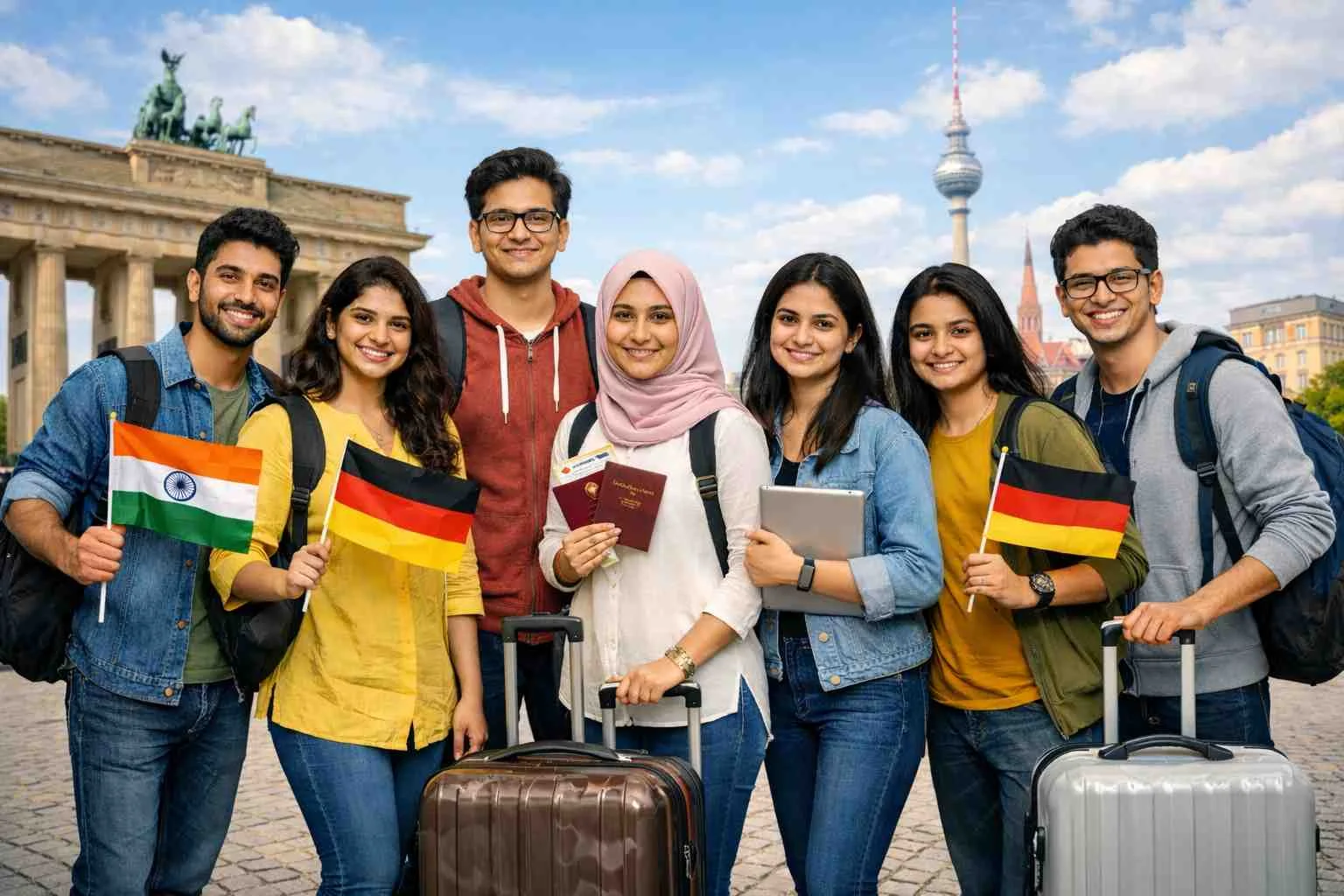
If your program runs longer than 90 days, which almost every bachelor's, master's, or PhD program does, you need the national visa, known as the D visa. This is the long-term study visa, the one most of our clients end up applying for.
If you are only attending a short language course or a workshop under 90 days, the Schengen C Visa applies instead. Very few degree-seeking students fall into this category, so if someone tells you otherwise, double-check with a professional before you waste weeks on the wrong application.
There is also something called the German Student Applicant Visa. This exists for students who have applied to a German university but have not yet received their formal admission letter. It lets you travel to Germany and finalize your admission process there, which can be useful if timing is tight.
Germany Study Visa Requirements: The Complete List
This is where most self-filed applications fall apart. Not because students are unqualified, but because one missing document details the entire file. Here is what the German mission in Pakistan actually asks for.
Confirmed university admission
You need your official admission letter, called the Zulassungsbescheid, before you can properly apply. Conditional or unconditional, both work, but you need something in writing from the university.
Academic credential evaluation through Uni-Assist or APS
Depending on your program and university, your transcripts often need centralized evaluation before the university itself will even process your application. This step alone can take weeks if you start it late.
Proof of financial means through a blocked account
This is the requirement students ask us about the most. As of 2026, you need to deposit €11,904 into a blocked account before your visa can be approved. Once you land in Germany, you can withdraw up to €992 per month from this account to cover your living costs. This is non-negotiable, and there is no way around it, but there are legitimate alternatives, such as a formal scholarship or a financial sponsor letter, that can replace it in specific cases.

Language proficiency proof
If your program is taught in English, most universities want an IELTS score somewhere between 6.0 and 7.0, depending on the institution. If your program is in German, you will need a certificate showing at least A2 or higher from a recognized testing body like the Goethe-Institut.
Health insurance and passport
Valid health insurance that covers you for the entire duration of your stay, arranged before your visa interview; a valid passport with enough validity remaining beyond your intended travel dates; the standard biometric photos; an application form; and a motivation letter explaining why Germany and why this specific program.
Missing or inconsistent paperwork is still the single biggest reason applications get delayed, not rejected outright, but delayed long enough to miss an intake. That is the real cost most students underestimate.
The Actual Application Steps
Once your admission and documents are in order, the process moves through the Consular Services Portal, which handles the digital side of scheduling for Islamabad, Karachi, and the regions each office covers. You submit your documents for an initial screening, and based on that, you either get an appointment slot or a request for corrected paperwork.
Processing itself typically takes somewhere between four and twelve weeks, depending on your case and how busy the consulate is at that time. Because of this, we always tell our students to start the visa process at least three to four months before their intended travel date, not the two weeks before intake that some agents casually suggest.
The visa fee itself is €75, payable in local currency at current exchange rates on the day of your appointment.
What It Actually Costs, Beyond the Blocked Account
Students often budget for the blocked account and then get surprised by everything around it. Between the visa fee, APS or uni-assist charges, language test fees, health insurance, and travel costs, you are looking at roughly another €1,200 to €2,000 in what we call sunk costs, money spent regardless of outcome. Add that to your blocked account requirement, and your realistic first-year liquidity number lands somewhere around €13,000 to €14,000. Planning for this honestly from the start saves you from last-minute panic closer to your appointment date.
The good news is that the math works in your favor once you are there. International students can work part-time, and at Germany's current minimum wage, a standard 20-hour week comfortably covers your monthly blocked account withdrawal limit and then some.
Why Pakistani Students Get Stuck, and It Is Rarely What They Expect
We have reviewed enough rejected and delayed files to notice a pattern. It is rarely about a student's academic profile. It is document sequencing. Students start their blocked account before finalizing admission, or they book a language test with a validity window that expires before their appointment even happens, or their APS certificate takes longer than expected because they started it too late in the process.
This is exactly the kind of sequencing problem that Germany study visa consultants exist to solve, and honestly, it is where most of the value in professional guidance actually lives. It is not about knowing secret shortcuts. It is about knowing the order of operations that need to happen so that nothing expires, nothing gets rejected for a technicality, and nothing forces you to restart a three-week wait.
Why Students Choose EDU Advance for This Process
We will be direct about something most consultancies will not say out loud. We do not take on every student who walks through our door. If your profile genuinely does not fit a German program, or if we think a different country or route serves you better, we will tell you that in the first meeting, not after we have taken your processing fee.
What we do instead is work case by case. Every student's academic background, financial situation, and program choice gets evaluated on its own terms before we build a visa strategy around it. That is a slower way to run a consultancy than the volume model most agencies use, but it is the reason our students rarely get stuck mid-process with a document gap nobody warned them about.
If you are searching for Germany study visa consultants in Lahore or anywhere in Pakistan, the honest advice is to pick people who will tell you no when no is the right answer. That is the only kind of guidance actually worth paying for.
Ready to Start Your Germany Application the Right Way
Every intake, we watch students lose months to preventable mistakes: a blocked account opened too early, a language test that expired, and an APS certificate requested too late. None of it is unfixable if you plan properly from the start.
If you are serious about a study visa for Germany from Pakistan, talk to EDU Advance before you start collecting documents on your own. One conversation can save you an entire intake cycle.
Get a case review, not a sales pitch.
Tell EDU Advance your academic background and your target country, and find out honestly whether your case is ready or what needs fixing first. Book your free consultation with EDU Advance today.
FAQs
Do I need IELTS for a German study visa if my program is in English?
Yes, in most cases. Universities usually ask for an IELTS score between 6.0 and 7.0, though the exact number depends on the specific program and institution you are applying to.
How much money do I need in my blocked account?
As of 2026, the requirement is €11,904 for one year, with monthly withdrawals capped at €992 once you arrive in Germany.
How long does the visa process actually take?
Processing generally takes four to twelve weeks after your documents are submitted, though we recommend starting three to four months ahead to account for appointment availability and document preparation.
Can I work while studying in Germany on a student visa?
Yes. Students can work part-time, generally up to 140 full days or 280 half days per year, which is enough to comfortably supplement their monthly living costs.
Is a German language certificate mandatory even for English-taught programs?
No, not for the visa itself, though some universities may still recommend basic German for daily life and part-time work opportunities.